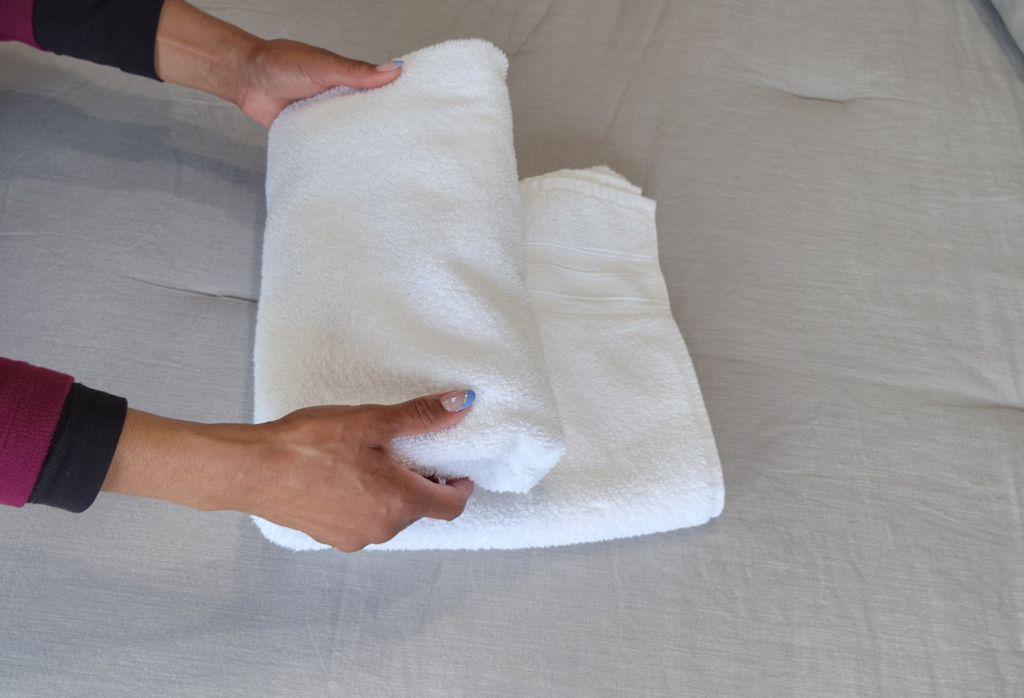
A recent client and I were standing near her bedroom closet. We had already sorted through the clothing, so we moved on to the shelves. That’s when I noticed the towels. Stacks of them. Bath towels. Hand towels. Face cloths. And then a brand-new comforter still in the packaging. Another comforter slouched on the floor of the closet like it had just given up.
I asked her how often she changes her towels and how frequently she does laundry. Then I said something that made her laugh. “You have one body. You can only use one towel at a time.”
Based on her laundry routine, I suggested a simple limit:
3 bath towels
3 hand towels
3 face cloths
She later joked to a family member that I “limited her towels.” But she also knew I was completely serious. Because limits are what most homes are missing.
When “More” Made Sense
During the session, our conversation moved beyond towels. She mentioned something that made me pause. “This might be a Caribbean thing,” she said. And I understood exactly what she meant.
Many of us who grew up in Caribbean or immigrant households remember a different relationship with “things.” Our parents and grandparents often lived simpler lives. You bought what you needed, you used it, you mended it, repurposed it, and replaced it when it wore out. There wasn’t a culture of excess because there wasn’t always access to excess.
Then, many families came to North America. Suddenly, there were more stores, more options, more space in our homes and more opportunities to buy. And for some of us, buying things became a quiet way of celebrating progress:
- A new set of towels.
- A matching bedding set.
- A little upgrade for the home.
Not because we needed it. But because it felt good to enjoy what once wasn’t available. Over time, though, the accumulation can start to outweigh the joy. Shelves fill up. Closets get crowded. And years later, we find ourselves asking a question many homeowners quietly wonder: How did we end up with all this stuff?
The Hidden Storage Problem
Here’s another piece of the puzzle most people don’t think about. Many homes have ample storage space – closets, linen closets, basements, or extra cabinets. And when space exists, it becomes very easy to hide things. Another bulky comforter, extra towels, three unopened bottles of detergent, and 15 sets of sheets (from that bath warehouse sale).
Things get tucked away with the quiet promise, “I’ll deal with that later.” But the purchasing continues until one day later, and the space feels overwhelming.
We Weren’t Always Like This
Sometimes during organizing sessions, we find ourselves laughing about how things used to be.
Do you remember those bathroom mat sets from the 80s? There was one in front of the toilet, one wrapped around the base, one on the tank, one on the seat cover, and another on the floor. Looking back, was all of that really necessary? Not at all. But somehow, if your bathroom didn’t have the full set, it felt like you weren’t quite keeping up.
What’s interesting is that even then, many households were still practicing limits without realizing it. You bought one box of detergent and used it until it was finished. Each family member had a small, manageable set of towels. You kept just enough underwear for the week because it was being washed regularly.
Things were used, cared for, and used again. There was a natural rhythm to it all. And when there’s rhythm, limits tend to take care of themselves.
The Truth About Limits
Setting limits isn’t about restriction. It’s about creating a system your home can actually support. When you know how much of something your household realistically uses, it becomes easier to:
- store it
- maintain it
- replace it when needed
Limits remove the constant decision-making. Instead of asking:
“Where am I going to put this?”
You start asking:
“Do I already have enough?”
Practical Household Limits (A Starting Point)
Every home is different, but these are reasonable starting points for many households.
Towels
Per person:
- 3 bath towels
- 3 hand towels
- 3 face cloths
Bed Sheets
Per bed:
- 2–3 sheet sets
Comforters / Duvets
Per bed:
- 1 in use
- 1 spare
Throw Blankets
3–5 for the entire home is usually plenty.
Laundry Detergent
1 open + 1 backup.
Kitchen Dish Towels
8–12 total, depending on how often you do laundry.
Water Bottles / Travel Mugs
1–2 per person.
Coffee Mugs
Enough for your household plus a few guests — not a cabinet overflowing.
Cleaning Supplies
1 primary product for each cleaning job. Not five versions of the same thing.
The Question That Changes Everything
When we finished editing the towels, she paused for a moment and said something that really stayed with me. She shared that for years, she had been buying towels (decor, clothing) as a way to reward herself. Sometimes it was to celebrate a milestone, sometimes to decorate her bathroom, and other times simply because she could.
But as we stood there looking at the shelf again, now holding only the towels she truly needed, something shifted for her. She realized it was never really about the towels.
What she had been seeking was the feeling of creating a beautiful home and acknowledging how far she had come in life. And now, in this chapter, something else felt even better. Managing less. Not because she couldn’t have more, but because she no longer needed more to feel satisfied.
That’s a moment many people eventually come to—the quiet shift where the question changes from, “Where will I put all this?” to something much more freeing: How much do I actually need?
If You Want Help Setting Up Your Linen Closet
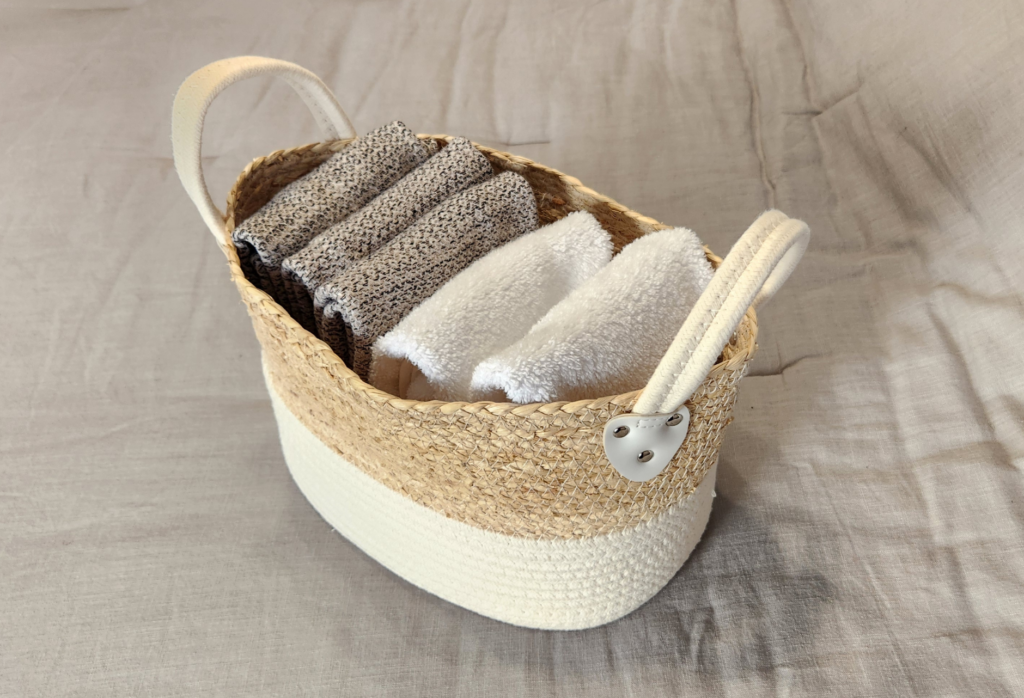
If your linen closet is overflowing with sheets, towels, and extra bedding, I created a checklist to help you simplify it. You can grab it here: [Link to Linen Closet Checklist]
It walks you through:
- deciding how much is enough
- organizational tools and tips
- keeping your linen closet easy to maintain
Because once limits are in place, organization becomes much easier.