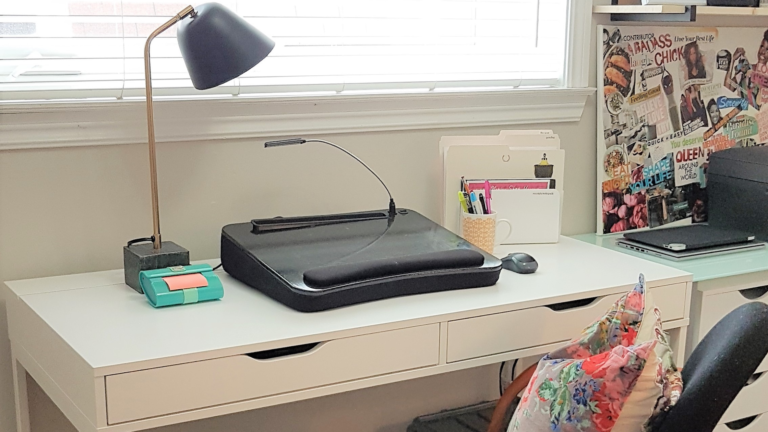
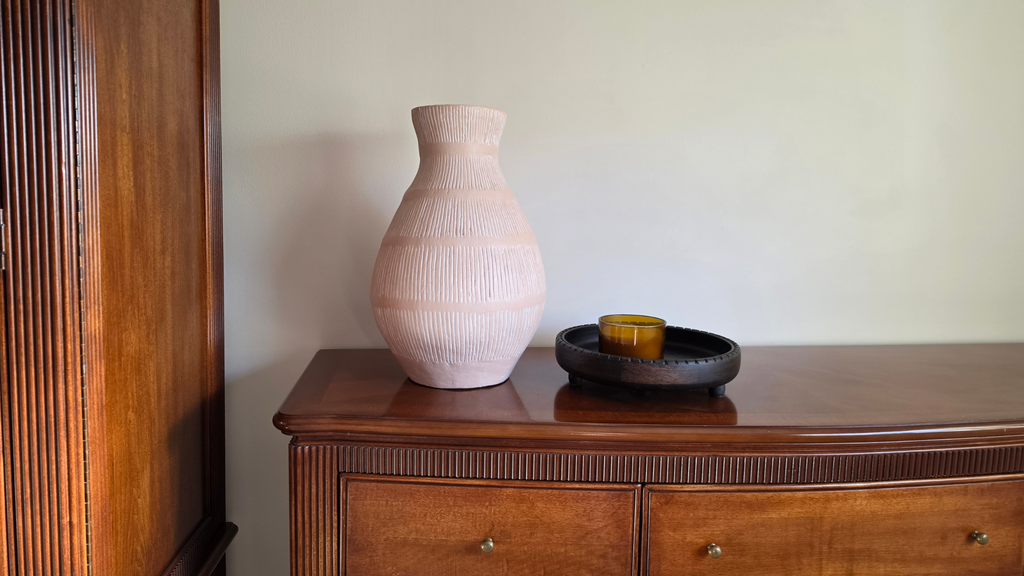
Creating a home that reflects who you are, how you live, and what truly deserves a place in it.
I’ve come to realize that creating a home you love isn’t necessarily about getting everything just right. Sometimes it’s about giving yourself permission to change your mind, rethink a space, and recognize that what worked a few years ago may not work for you today.
And if you’ve been following my home projects, you already know I’m no stranger to changing things around!
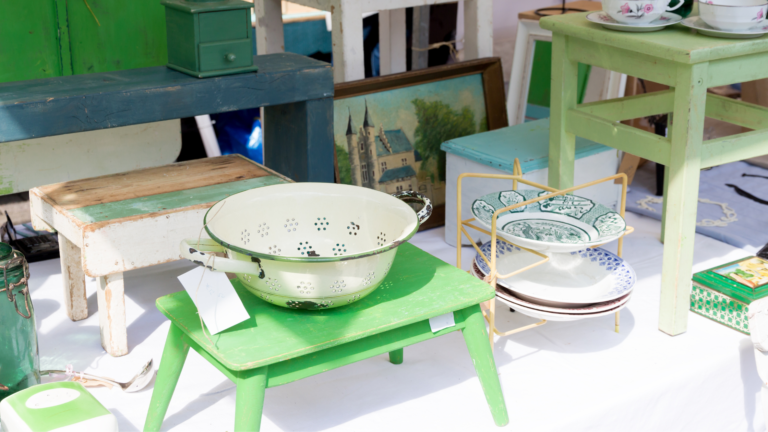
Over the years, my home has become a reflection of my love for decorating, DIY projects, vintage finds, rich colours, texture, and pieces that tell a story. But as much as I enjoy making a space beautiful, I’ve become increasingly mindful of what I bring into it and, just as importantly, what I choose to remove.
Intentional decorating isn’t simply about how a room looks.
It’s about how a room lives.
Your Home Is Allowed to Evolve
I don’t believe a home needs to be decorated once and considered finished forever.
Our tastes evolve. Our routines change. The way we use our spaces changes, too.
Sometimes a room that once felt perfectly comfortable starts to feel a little crowded. A piece of furniture that served a purpose for years no longer makes sense. Or perhaps you’ve discovered a new appreciation for a particular colour, material, or design style.
That doesn’t necessarily mean everything needs replacing.
It may simply mean it’s time to look at your home with fresh eyes.
I’ve been doing quite a bit of that lately, reconsidering furniture placement, editing decorative pieces, and deciding whether certain items still contribute to the overall feeling I want in my home.
And here’s something else: just because something is beautiful doesn’t automatically mean it belongs in your space.
Decorating With Intention Means Making Choices
One of the things I enjoy most about decorating is bringing together pieces that aren’t necessarily expected to work together.
I love the character of vintage furniture, the warmth of wood, the contrast of black and brass, and the richness of art and cultural influences. My style is eclectic and collected, with a mix of vintage finds, rich colours, warm woods, and pieces that reflect my love for African and Caribbean art and culture. I enjoy the contrast of black and brass, the character of older furniture, and incorporating pieces that have a story to tell.
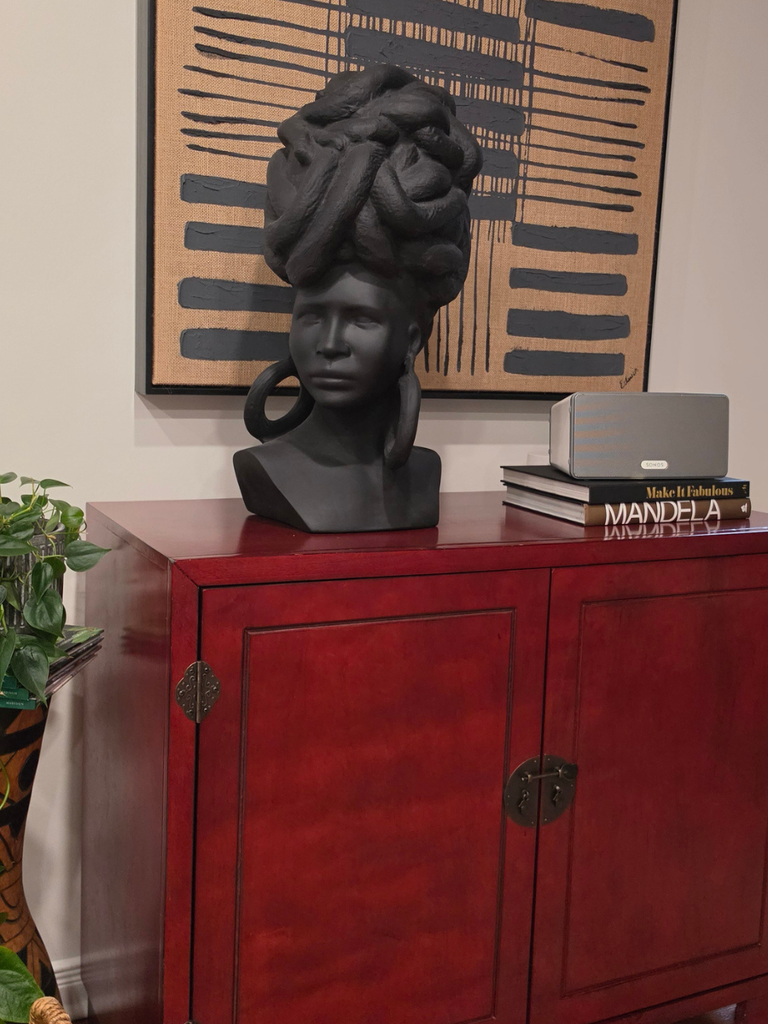
But as much as I love a layered, interesting space, I’m not interested in filling every corner simply because there’s room.
I want the pieces I choose to have presence.
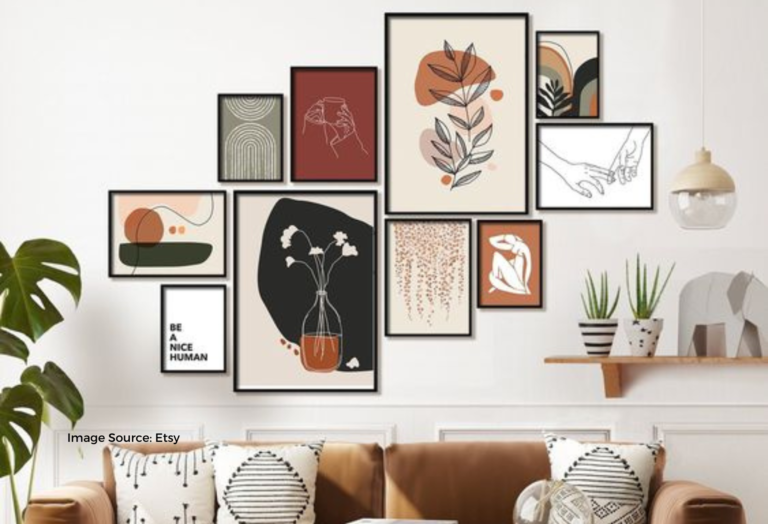
Sometimes that means allowing a beautiful piece of art to command attention rather than surrounding it with several smaller objects.
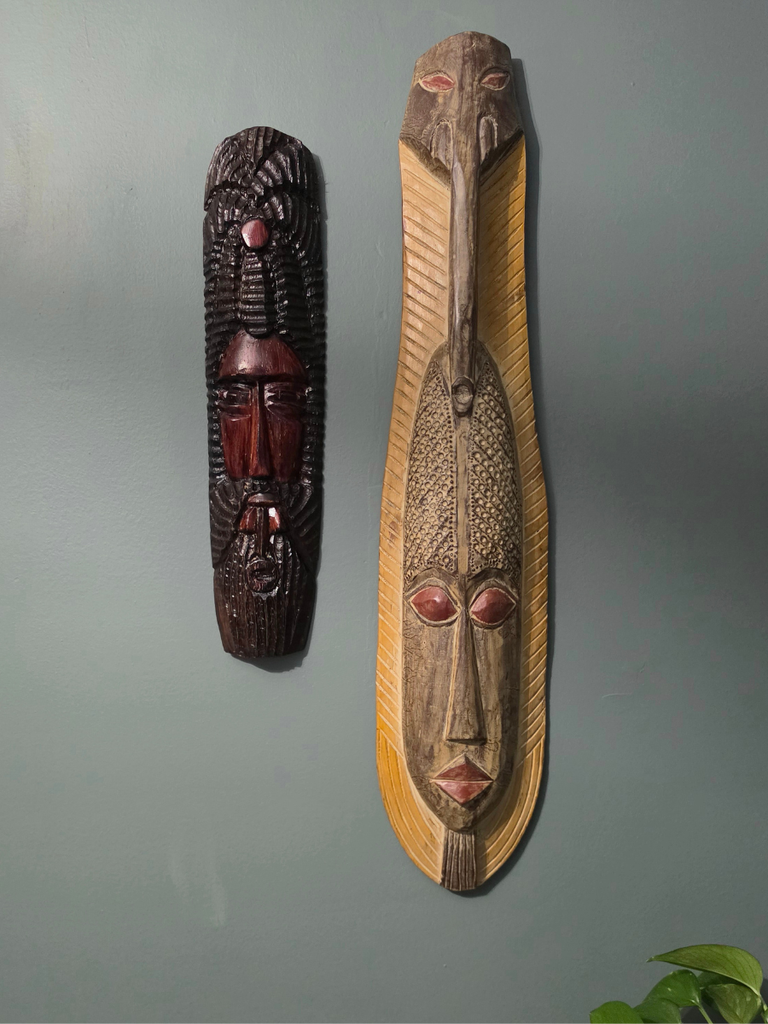
Other times, it means leaving a surface relatively bare so the few things displayed can actually be appreciated.
And occasionally, it means admitting that something I’ve held onto for years no longer works with the direction I’m taking.
That last one isn’t always easy!
Especially when you genuinely love beautiful things.
But appreciating something and needing to own it are two very different things.
My Kitchen: A Lesson in Thoughtful Transformation
My recent kitchen makeover is a perfect example of how my approach to decorating has evolved.
Rather than starting from scratch, I worked with much of what I already had.
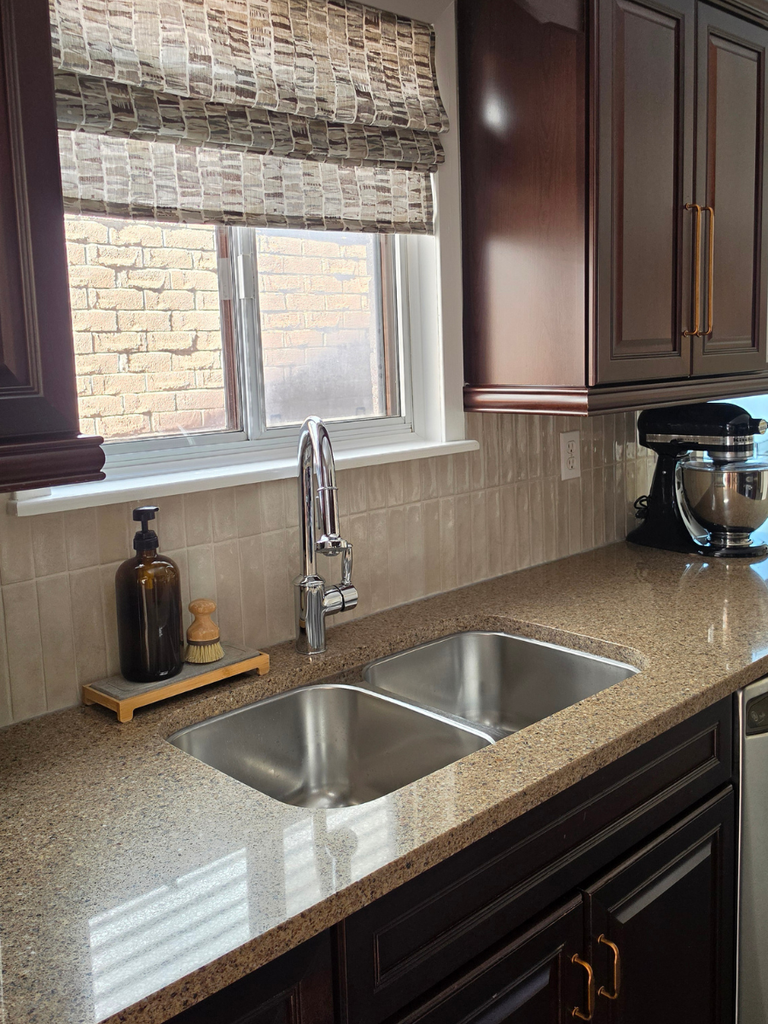
The biggest visual change came from replacing the backsplash with vertically stacked zellige-look porcelain tile. I also updated the cabinet hardware with brass-finish pulls and made my own Roman shade using a patterned fabric that adds personality without overwhelming the space.
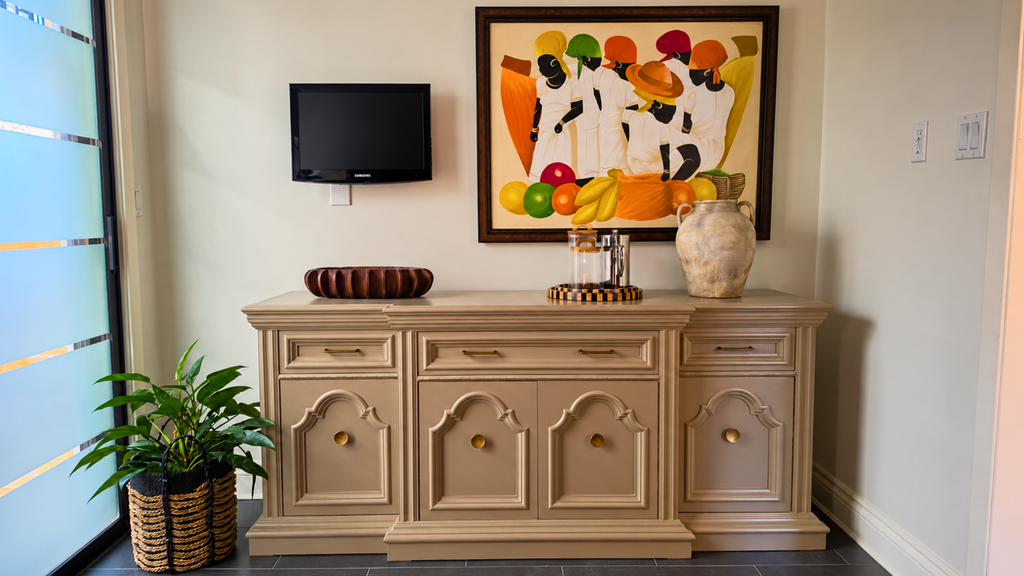
Another part of the transformation involved giving a secondhand Habitat for Humanity server new life with Benjamin Moore Kingsport Gray paint. What was once a traditional piece of furniture is now a dedicated coffee station that also houses my small appliances and accessories. It’s a perfect example of how repurposing something you already own can bring both character and functionality to a space while helping keep everyday clutter off the countertops.
Each decision was considered in relation to the others.
I wanted the kitchen to feel cohesive with the adjoining living and dining areas while still having its own character.
But the transformation wasn’t only about finishes.
I also reconsidered what needed to remain on the countertops and what could be relocated.
My stand mixer, for example, is heavy and gets used often enough that storing it elsewhere would be inconvenient. So it stays.
The Ninja Bullet, on the other hand, found a new home at the nearby server.
Small decisions, yes. But they make a difference in how the kitchen functions every day.
And despite completing the makeover, I’m still paying attention to how the space works.
Because a beautiful room that makes everyday life more difficult isn’t my idea of successful decorating.
Sometimes the Most Impactful Change Is What You Remove
This is where my years as a professional organizer continue to influence the way I decorate.
I’ve seen how easily we can accumulate things simply because we have somewhere to put them.
An empty shelf becomes an invitation to buy another decorative object. A spare corner suddenly needs a chair. A cabinet with extra room becomes storage for items we rarely use.
But having space for something isn’t necessarily a reason to keep it.
I’ve been challenging myself to become more selective, particularly with decorative pieces and entertaining items I’ve collected over the years.
Do I still love it? Does it serve a purpose? Would I choose it again today? Does it contribute to the feeling I’m trying to create?
And sometimes the most revealing question is:
If I removed this item, would I actually miss it?
Not every item needs to earn its place through practicality. Some things deserve to stay simply because they bring joy, hold meaning, or make a space feel personal.
But I want those choices to be conscious.
The goal isn’t to own as little as possible. It’s to surround myself with things I genuinely appreciate
A Beautiful Home Doesn’t Have to Be Perfect
Social media has a way of presenting homes as though every room is always finished, styled, and camera-ready.
Mine certainly isn’t!
There are projects waiting to be completed, pieces of furniture I’m reconsidering, and ideas that may take months, or longer, to bring to life.
And I’m perfectly fine with that.
I’ve learned to appreciate the process as much as the finished result.
The planning, the experimenting, the occasional change of direction, and yes, even those DIY projects that turn out to be far more involved than anticipated.
They’re all part of creating a home that feels personal rather than perfectly staged.
I’m also becoming more comfortable allowing spaces to breathe, instead of feeling compelled to fill every available surface or wall.
A home can be layered, colourful, collected, and full of personality without feeling visually overwhelming.
For me, that’s the balance worth pursuing.
Creating a Home That Feels Like You
If there’s one thing I hope to share through my decorating journey, it’s that you don’t need to follow every trend, replace everything you own, or complete a room in one weekend to create a home you love.
Start by paying attention to how you feel in your space.
Notice what works, what frustrates you, what brings you joy, and what you’ve simply grown accustomed to seeing.
Give yourself permission to move things around, experiment, edit, and make changes gradually.
And don’t underestimate the impact of choosing not to add something.
The most beautiful homes aren’t necessarily the ones with the most beautiful things.
They’re the ones where the things we choose to live with feel like they truly belong.
And as my own home continues to evolve, that’s the feeling I’ll keep working toward.
I’d love to know: Has your decorating style changed over the years, or are you finding yourself becoming more intentional about what you bring into your home?