
There’s something about Christmas that makes us feel as though we need to buy a little more.
One more gift under the tree. A little something for someone who wasn’t originally on our list. Something extra because what we’ve already purchased doesn’t quite feel like enough.
And then there are the people we genuinely have no idea what to buy for, but we buy something anyway.
It’s a beautiful season of generosity, thoughtfulness and tradition. But somewhere along the way, the act of giving can become more about fulfilling an expectation than considering what someone might actually need, use or enjoy.
Come January, some of those well-intentioned gifts quietly become part of someone else’s clutter.
When a gift becomes something to manage.
As a professional organizer, I’ve come across countless items that people hold onto simply because someone gave them as gifts.
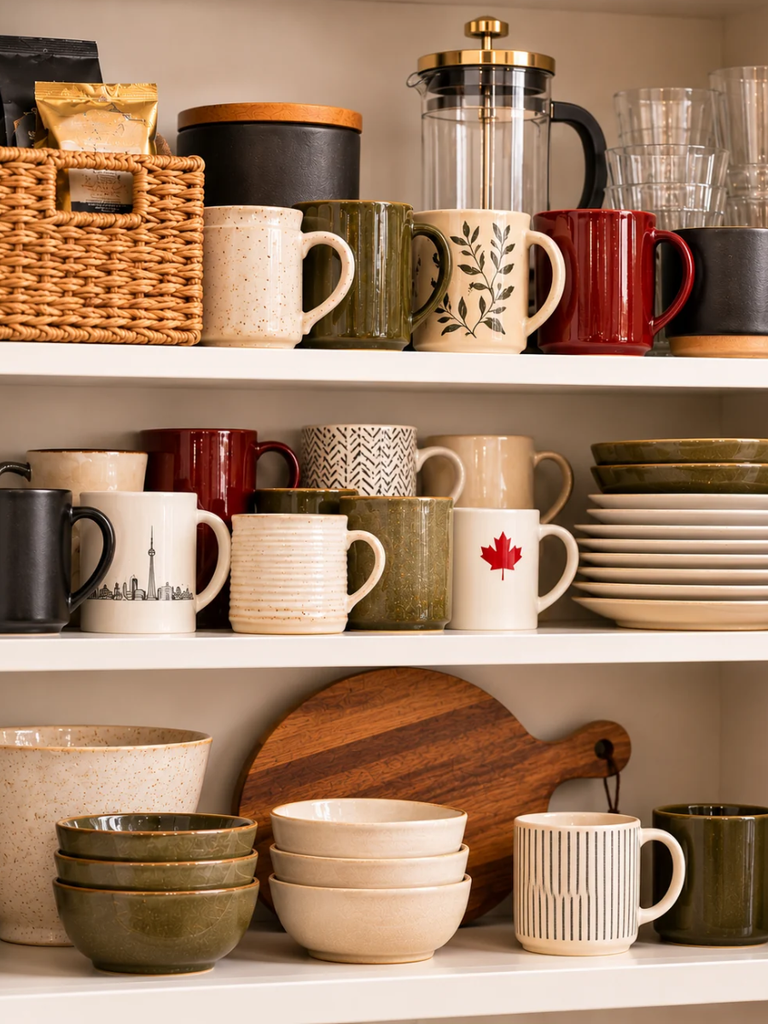
Candles no one has ever lit. Mugs tucked behind other mugs. Bath and body products waiting for someone to use them. Decorative pieces that have never quite found their place. Specialty kitchen gadgets still in their original packaging.
Often, there’s nothing wrong with the item itself. It just doesn’t fit into the recipient’s life.
What makes these belongings particularly difficult to part with is the sentiment we attach to them. Getting rid of the item can feel like dismissing the thoughtfulness of the person who gave it to us.
So we keep it.
We find somewhere to store it, move it around when we need the space, and occasionally remind ourselves that we really should use it.
Someone may give us a gift in a moment, but the responsibility of owning it can last for years.
Are we giving out of thoughtfulness or obligation?
Think about how often we find ourselves shopping for someone who already has everything they need.
We wander through stores looking for inspiration, pick up something that seems nice enough, and hope they’ll like it.
Sometimes, we’re simply trying to avoid showing up empty-handed.
Other times, we buy for the sake of having something to wrap or because exchanging gifts is something we’ve always done.
Traditions can be wonderful, but they don’t have to remain unchanged when our lives, needs and circumstances have changed.
Perhaps the family gift exchange no longer needs to involve everyone buying for everyone. The adults might be just as happy sharing a meal together. Someone may even appreciate us asking what they need rather than receiving another surprise.
It’s worth considering whether some of the pressure we feel around Christmas shopping comes from expectations we’ve never actually questioned.
When our gift-giving traditions evolve.
Over the years, our own family has shifted towards giving experiences rather than accumulating more toys and belongings.
As children get older, their interests change. The toys that once filled their Christmas lists often give way to increasingly expensive technology and other items.
Yet even when children outgrow their toys, parents sometimes struggle to let them go because they remember how much they spent on them.
What started as a gift eventually becomes something we hold onto because we associate its value with the money we invested in it.
Choosing experiences offers a different kind of value. It gives us an opportunity to create memories without necessarily adding more belongings to our homes.
It also reminds us that we can change how we celebrate Christmas without diminishing the joy of the occasion.
A thoughtful gift doesn’t always need a permanent home.

Some of the most thoughtful Christmas gifts are the ones that fit naturally into someone’s existing life.
A favourite coffee or tea. A meal from a restaurant they love. Tickets to something they’ve been wanting to experience. An afternoon spent together. Replacing something they use regularly that has seen better days.
Even a practical gift can feel incredibly personal when it reflects how well you know someone.
And there’s absolutely nothing wrong with giving a beautiful physical object. Something someone has admired, specifically requested or will genuinely enjoy can be a wonderful gift.
The distinction isn’t between material and non-material gifts.
It’s between giving someone something that adds to their life and giving them something they now have to accommodate.
What about the gifts we receive?
Receiving a gift graciously doesn’t mean we’re obligated to keep it indefinitely.
We can appreciate the gesture without finding a permanent place for the object. Gratitude for someone’s generosity doesn’t prevent us from recognizing that another person might get more enjoyment from the item.
The relationship isn’t stored inside the gift.
And perhaps, as gift-givers ourselves, we could extend that same understanding to the people we give to.
Would we really want someone to sacrifice space in their home, or feel guilty every time they considered letting something go, simply because it came from us?
I would hope not.
A little less, with a little more thought.
Before getting too far into your Christmas shopping this year, consider a slightly different question.
Instead of asking, What can I buy for this person?
Try asking, What would genuinely add something to this person’s life?
The answer might still be something beautifully wrapped under the tree. It might be something consumable, an experience, a helping hand or simply time spent together.
Christmas doesn’t have to become less generous for us to become more intentional about what we give.
After all, the thought behind a gift should be something worth holding onto.
The gift itself doesn’t always have to be.
Imagery sourced from Canva and AI-generated for illustrative purposes.